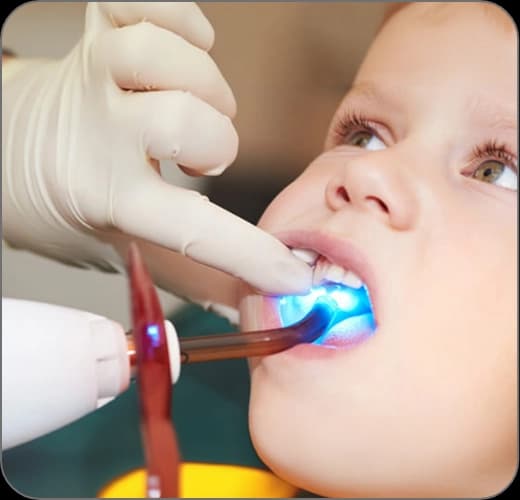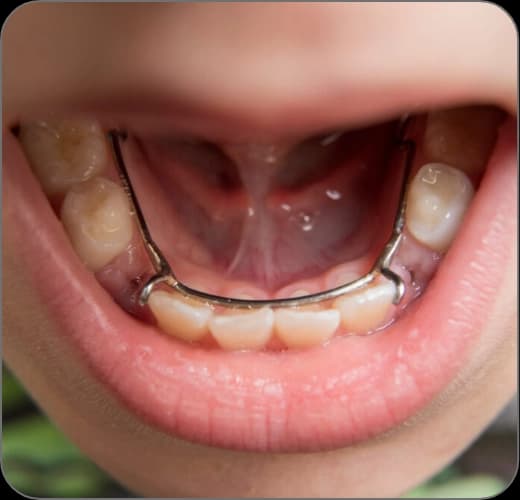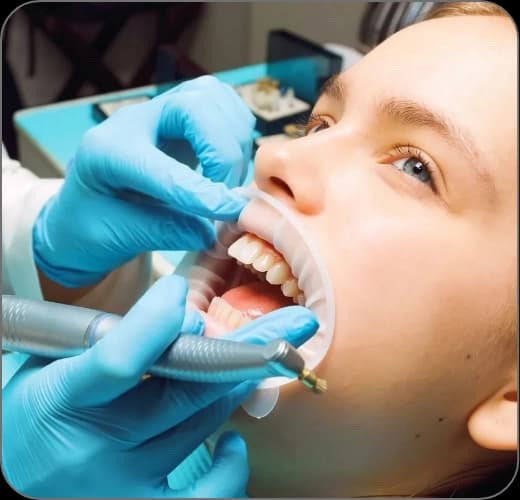
Professional fluoride application is one of the preventive methods whose effectiveness against tooth decay in children is scientifically well established. Assoc. Prof. Dr. Sezin Özer tailors the type and frequency of the application to each child, based on an individual caries risk assessment. The procedure is quick, involves no drilling and is completed comfortably by most children.
What is fluoride application and how does it protect teeth?
Fluoride is a mineral that becomes incorporated into the structure of tooth enamel, making the tooth more resistant to acid attacks. Bacteria in the mouth break down sugary foods by producing acids, and over time these acids cause mineral loss in the enamel. Professionally applied topical fluoride counteracts this cycle by supporting the enamel in regaining minerals (remineralization).
Another important benefit of fluoride is seen in early-stage decay that has not yet formed a cavity. These early findings, known as white spot lesions, can often be arrested with regular fluoride applications combined with proper oral care — the aim being to avoid a process that would otherwise end in a filling.
Which form of fluoride is used at which age?
The form of application is chosen according to the child's age. In children under 6, fluoride varnish is used, as it is the safest option with regard to the risk of swallowing. The varnish is painted onto the tooth surface with a fine brush and dries quickly, so its effect continues for a long time; fluoride gels and foams are not preferred in this age group.
From the age of 6, the options widen: alongside fluoride varnish, fluoride gels or prescription high-fluoride home care products may also be added to the preventive program where the dentist considers them appropriate. Assoc. Prof. Dr. Sezin Özer decides together with the family which method is suitable, after an examination and risk assessment.
How is the frequency of application determined?
The frequency of fluoride application is not set by a standard timetable but by the child's caries risk assessment (CRA). This assessment systematically evaluates factors such as dietary habits, oral hygiene, plaque accumulation, enamel structure and previous history of decay.
A child in the moderate-risk group is generally expected to benefit from a fluoride application at least every six months, while for a high-risk child this interval may be shortened to every three months. Because a child's risk status can change over time, the assessment is repeated at regular check-ups and the program is updated accordingly.
Is fluoride application safe?
In professional fluoride application, the amount and concentration are under the dentist's control; by choosing a form appropriate to the child's age, the risk of swallowing is kept to a minimum. The varnish form preferred for young children was developed for exactly this purpose: it adheres to the tooth surface, dries quickly and works in a controlled way.
Fluoride toothpaste used at home and professional application are not alternatives to each other but complementary. From the very first appointment, Assoc. Prof. Dr. Sezin Özer guides parents on the age-appropriate amount of toothpaste and the right brushing technique, so that the preventive program continues at home as well.
A child-friendly treatment experience
Because fluoride application involves no needles and no drilling, it is also valuable as a positive first experience of dental procedures. Before the session, Assoc. Prof. Dr. Sezin Özer uses behavior guidance techniques such as tell-show-do: the child sees the brush that will be used, experiences the procedure like a game and completes it together with the dentist.
For children who find it hard to settle into the clinic or who feel intense anxiety, the plan is adapted to the child's own pace; the aim is to turn preventive care into a habit without ever distressing the child.
The treatment, step by step
Examination and caries risk assessment
The teeth and gums are examined; diet, hygiene and decay history are evaluated to determine the child's risk level.
Cleaning the teeth
If needed, plaque on the tooth surfaces is removed with a gentle professional cleaning; this step is also an opportunity for the child to get to know the instruments.
Applying the fluoride
The age-appropriate form (varnish for young children) is painted onto the tooth surfaces with a fine brush; the procedure is completed within a few minutes.
Advice and recall schedule
Aftercare instructions are explained; a three- or six-month recall and repeat schedule is planned according to the child's risk level.