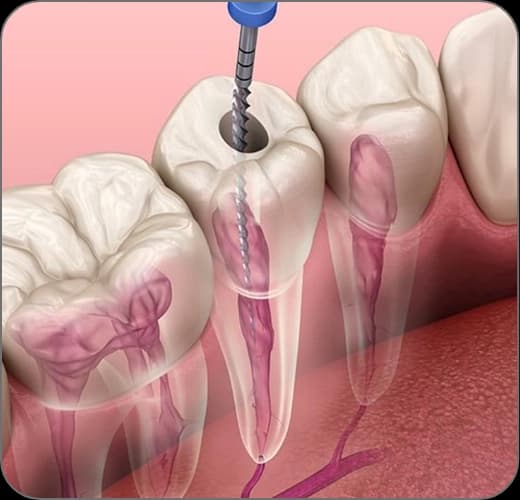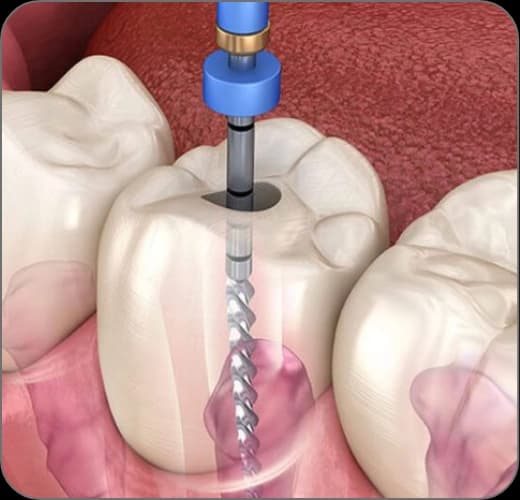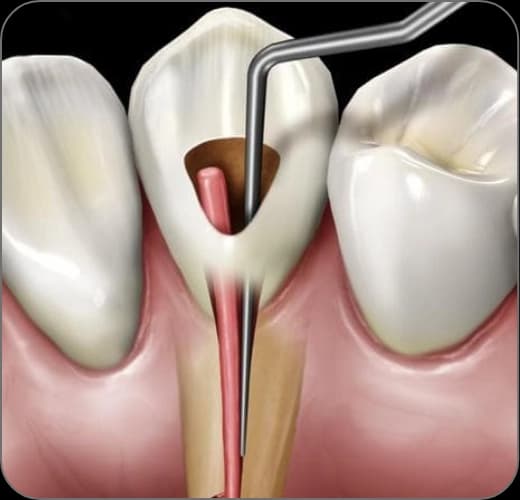
Pulp capping is a protective treatment applied when decay comes very close to the dental nerve (the pulp) or exposes it at a pinpoint spot: the nerve tissue is covered with a biocompatible material so the tooth can stay vital. The goal is to support the tooth's capacity to repair itself without the need for root canal treatment. This approach is especially valuable in children and young patients whose roots have not yet fully formed.
What Is Pulp Capping, and When Is It Used?
When a deep cavity is being cleaned and the pulp is closely approached, or the pulp becomes exposed at a tiny point, removing the entire nerve is not always necessary. If the pulp is vital and there are no signs of irreversible inflammation — such as spontaneous pain, night pain or swelling — the nerve tissue can be covered with a protective material so the tooth remains alive.
In this sense pulp capping is a valuable chance given to the tooth: applied in the right case, the pulp heals, the tooth retains its vitality and more extensive treatment may never be needed.
Indirect and Direct Pulp Capping
In indirect pulp capping, the last thin layer of dentin over the pulp is preserved; after most of the decay has been removed, a protective material is placed over this layer and the tooth is sealed with a leak-proof filling. The tooth's self-repair is supported without ever exposing the pulp.
Direct pulp capping is used when the pulp is exposed at a small, pinpoint spot: under clean, isolated conditions the exposed area is covered directly with a biocompatible material. In both methods, the keys to success are a healthy pulp and a final filling with a flawless seal.
Biocompatible Materials Used
Alongside calcium hydroxide, which has been used in pulp capping for many years, calcium silicate-based materials such as MTA and Biodentine stand out today. These new-generation materials are well tolerated by the tissue and support the formation of a protective layer of hard tissue over the pulp.
The essence of the modern approach is to encourage the tissue to heal rather than suppress it: when the right material, a clean working field and a tightly sealed final filling come together, the pulp is given the opportunity to repair itself.
Why Pulp Capping Matters in Children and Young Permanent Teeth
Newly erupted permanent teeth have roots that are still developing, and the pulp must stay vital for the root to mature. Vitality-preserving approaches are therefore always the first choice for deep cavities in children and adolescents.
Pediatric dentist Assoc. Prof. Dr. Sezin Özer works at her clinic in Atakum, Samsun, with a treatment philosophy that prioritizes catching decay at an early stage and preserving the vitality of the tooth. Even if your child has a deep cavity, pulp capping performed at the right time can allow the tooth to continue its healthy development.
Follow-Up After Pulp Capping
Mild sensitivity lasting a few days after the procedure is normal. At follow-up appointments, the vitality of the tooth is monitored with clinical tests and, when needed, X-rays.
If the damage to the pulp turns out to be deeper than expected, a pulpotomy may be considered in baby teeth and root canal treatment in permanent teeth. Even in that scenario, an early pulp capping will have bought the tooth valuable time.
The treatment, step by step
Examination and assessment
The depth of the decay and the vitality of the pulp are assessed with clinical tests and X-rays, and suitability for pulp capping is decided.
Anesthesia and removing the decay
Under local anesthesia, the decayed tissue is carefully removed in an isolated working field.
Placing the protective liner
The area adjacent to the pulp, or the exposed spot, is covered with a biocompatible material.
Leak-proof final filling
The tooth is sealed with a permanent filling that blocks microbial leakage.
Check-ups and vitality monitoring
The tooth's healing is monitored at follow-up appointments, and the treatment plan is updated if needed.