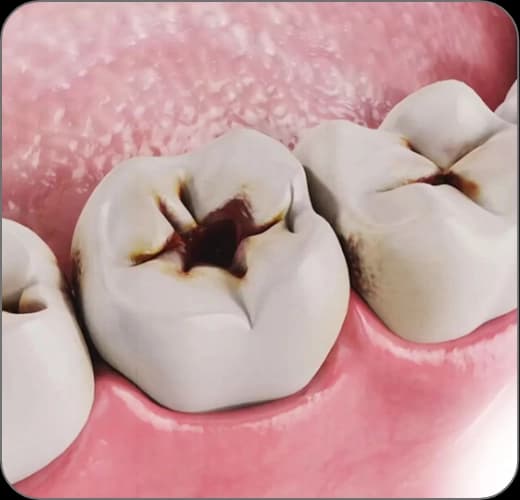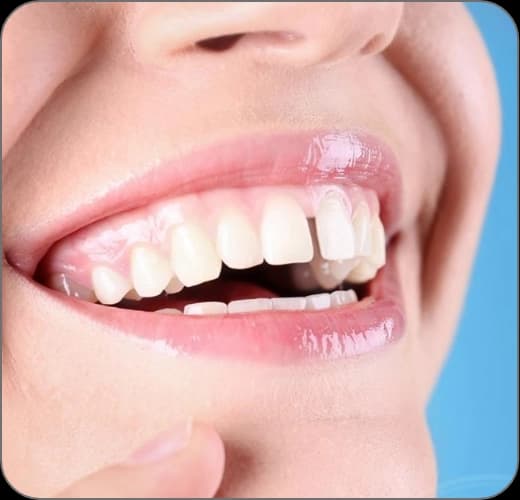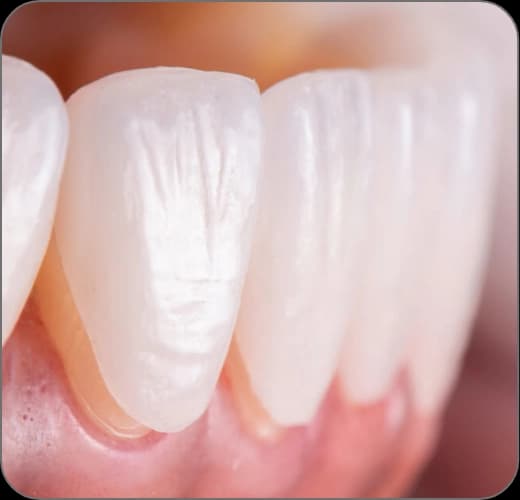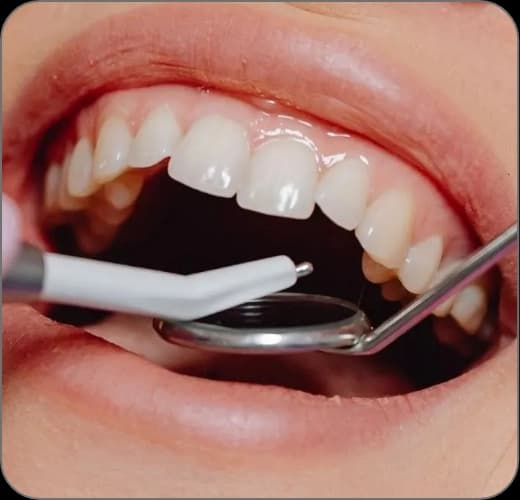
An aesthetic filling is a restoration made with composite resin materials that blend in with the natural color of the tooth. The goal is not only to remove decay, but to restore the tooth's shape, function and appearance with as little loss of healthy tissue as possible. At our clinic, the material is chosen to suit the tooth and the patient's age, in both children and adults.
What is an aesthetic filling?
A composite filling is placed by applying a tooth-colored, resin-based material to the tooth in thin layers after the decay has been removed, then hardening it with a special curing light. Because the material bonds chemically to the tooth, no additional tooth structure needs to be removed for retention; healthy enamel and dentin are preserved as much as possible.
Today's nanofilled composites offer high wear resistance and a polish that lasts, which is why they are used successfully not only in back teeth but also in aesthetic restorations of the front teeth.
When is it used?
Aesthetic fillings are the first-choice repair in many situations where the loss of tooth structure is limited:
- Tooth structure lost to decay
- Chipped or worn tooth edges
- Minor corrections of shape and size
- Closing narrow gaps between teeth (bonding)
- Replacing old fillings
Fillings in children and primary teeth
As a pediatric dentist, my priority with primary tooth fillings is to keep the tooth doing its job — holding space for the permanent tooth coming in underneath — until it is naturally due to fall out. The main reason primary tooth fillings fail is not that the material breaks, but that new decay starts at the edge of the filling; that is why, when choosing a material, I look less at mechanical strength and more at how well it seals against the tooth.
Depending on the child's caries risk, the size of the cavity and how comfortable the child is in the chair, I select the material that suits the tooth from among composites, compomers and fluoride-releasing glass ionomer materials. If the loss of tooth structure is extensive, instead of a simple filling I discuss with the family the options of stainless steel or zirconia crowns, which protect the tooth as a whole.
Advantages of composite fillings
Composite fillings are completed in a single visit, match the color of the tooth, and can be repaired when needed without being removed entirely. Their minimally invasive placement is an important advantage for the long-term health of the tooth.
Assoc. Prof. Dr. Sezin Özer's academic work includes research on the biocompatibility and durability of restorative materials, and the material choices at our clinic draw on this experience.
The treatment, step by step
Examination and diagnosis
The extent of the decay or structural damage is mapped through examination, supported by X-rays when needed.
Anesthesia and isolation
Where required, local anesthesia keeps you comfortable; the treatment area is isolated from saliva.
Removing the decay
Decayed tissue is removed while healthy enamel and dentin are preserved as much as possible.
Placing the composite
A composite matched to your tooth shade is applied layer by layer and hardened with a curing light.
Polishing and bite check
The filling's anatomy is shaped, your bite is checked and the surface is polished.