Tooth decay is a disease that begins when acids produced by plaque bacteria from sugary foods dissolve the enamel, and, if left untreated, advances toward the nerve of the tooth. Caught early, it can usually be stopped with a small filling — sometimes without a filling at all. At our clinic, treatment is planned according to the stage of the decay and the patient's individual caries risk.
How does tooth decay develop?
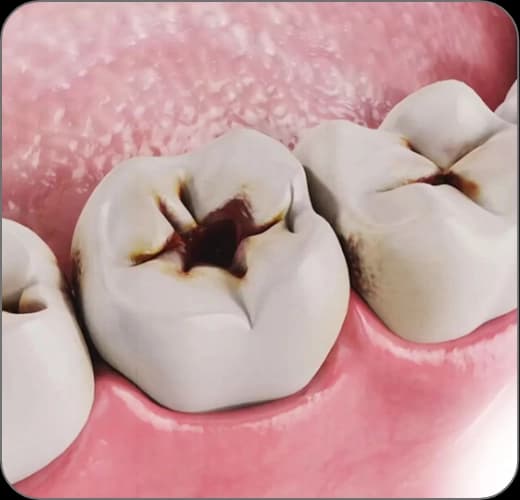
Bacteria in the mouth use sugars from food to produce acid. These acids dissolve the minerals in tooth enamel; once saliva's repair capacity is exceeded, chalky "white spot lesions" appear on the enamel first, followed by visible cavities.
Frequent sugary snacking between meals, inadequate brushing, low salivary flow and deep fissures on the tooth surfaces all increase caries risk. Decay is not a one-off event; it is a dynamic process that can progress — or be stopped — depending on diet and hygiene habits.
Why is early diagnosis so important?
An early lesion caught at the white spot stage can be halted with fluoride applications, fissure sealants and changes in daily habits. Once decay has passed through the enamel into the dentin, a filling is needed; in deep decay approaching the nerve, pulp capping, pulpotomy or root canal treatment come into consideration.
The deeper the decay, the bigger the treatment. Regular check-ups are the key to catching decay while it is still small — protecting both the tooth and the comfort of treatment.
My approach to decay in children
As a pediatric dentist, I start every patient with a Caries Risk Assessment: I evaluate factors such as eating patterns, hygiene habits, plaque accumulation and enamel quality to determine the child's risk level. Everything from check-up intervals to preventive measures is planned around this assessment.
My doctoral thesis examined the cariogenic effects of infant-feeding foods, so I place particular emphasis on dietary counseling in early childhood caries (commonly known as "baby bottle tooth decay"). During treatment I use behavior guidance techniques such as tell-show-do to help the child settle into the chair with confidence, and where cooperation is not possible, I discuss the option of sedation together with the family.
What if the decay has reached the nerve?
With deep decay, the aim is not to extract the tooth but to keep it alive. When decay lies very close to the nerve, pulp capping supports the tooth's own healing; in primary teeth, a vital pulpotomy removes only the inflamed upper portion of the nerve. These procedures now use biocompatible materials that support tissue healing.
In permanent teeth, if the entire nerve is affected, root canal treatment can save the tooth from extraction.
How to protect against decay
Tooth decay is largely a preventable disease. The cornerstones of a personalized prevention program are:
- Brushing twice a day with a fluoride toothpaste
- Limiting sugary snacks and drinks between meals
- Regular professional fluoride applications
- Fissure sealants on the molars
- Regular dental check-ups scheduled according to risk
The treatment, step by step
Examination and diagnosis
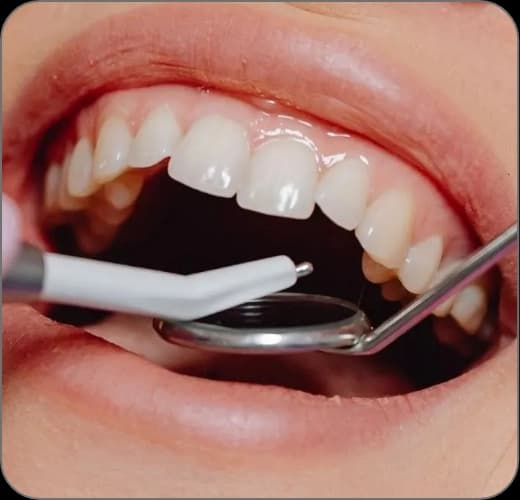
All tooth surfaces are examined; bitewing X-rays are used when needed to detect decay between the teeth.
Risk assessment
Diet, hygiene and clinical findings are evaluated together to determine the caries risk level.
Removing the decayed tissue
Decayed tissue is removed, with local anesthesia where needed; sound tissue is preserved.
Restoration
The tooth's shape and function are restored with a filling material suited to the tooth and the patient's age.
Prevention program and follow-up
Fluoride, fissure sealants and habit changes help prevent new decay from forming.