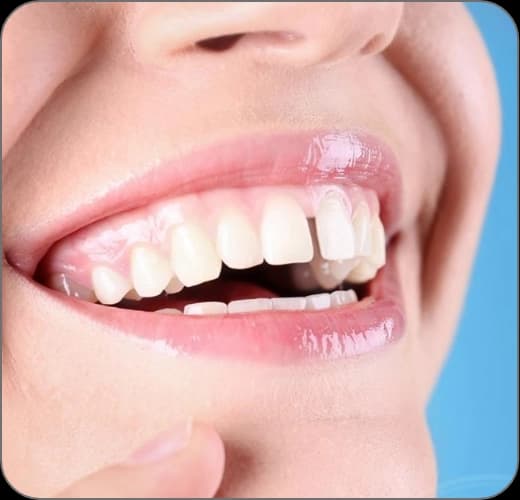
A diastema is a gap between teeth, most often seen between the upper front incisors. Sometimes it is purely an aesthetic matter, but at times there is an underlying cause such as a prominent lip frenulum, a missing tooth or gum problems. The right treatment starts with identifying that cause.
What causes a diastema?
There is no single cause of gapped front teeth, and the treatment plan changes with the cause. The main causes are:
- A thick upper lip frenulum, or one that extends down between the teeth
- A mismatch between tooth size and jaw width
- Small or missing lateral incisors
- Prolonged thumb sucking or tongue thrusting habits
- Tooth movement caused by gum disease
Gapped teeth in children: always a problem?
During the mixed dentition period — the years when primary and permanent teeth are present together — a gap between the upper front teeth is very often a natural part of development. As the canines erupt, this space usually closes on its own.
As a pediatric dentist, I do not rush in at this stage; I monitor the gap at regular check-ups, and if there are factors pointing to a permanent diastema — such as the position of the lip frenulum or sucking habits — I guide the family in good time. Where indicated, an orthodontic evaluation can be planned before the permanent dentition is complete.
What are the treatment options?
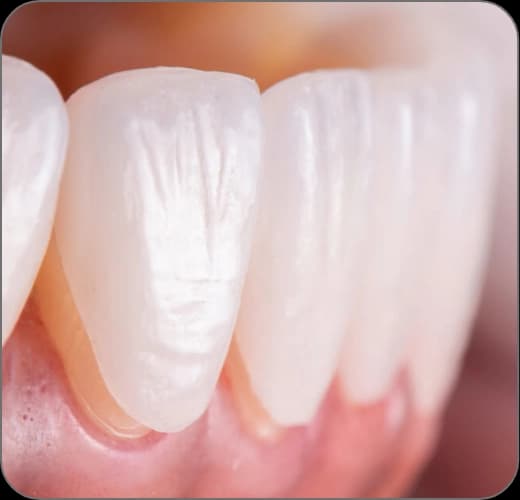
Depending on the width of the gap, its cause and your expectations, several approaches can be used alone or in combination. For narrow gaps, composite bonding usually delivers a result in a single visit without any drilling of the teeth. Where more extensive shape and color correction is desired, composite or porcelain veneers may be preferred.
If the gap stems from a misalignment of the teeth, the cause-directed approach is orthodontic treatment: braces or clear aligners move the teeth into their ideal positions. In diastemas caused by the lip frenulum, a short procedure called a frenectomy may accompany the treatment.
How is treatment planned at our clinic?
At Dental Prime, diastema treatment is a shared plan when needed: our orthodontist manages the tooth movement, while the restorative side provides the final aesthetic touch. The cause is first clarified through examination and, if necessary, X-rays; the options are then explained with their timelines and requirements, and the decision is made together.
The treatment, step by step
Examination and identifying the cause
The source of the gap is established through clinical examination and, when needed, X-rays.
Choosing the treatment plan
Bonding, veneers, orthodontics or frenectomy are planned according to your needs.
Treatment
Composite bonding is usually completed in a single visit; orthodontic treatment progresses over a period of months.
Retention and follow-up
After orthodontics, retainers and regular check-ups help keep the result stable.