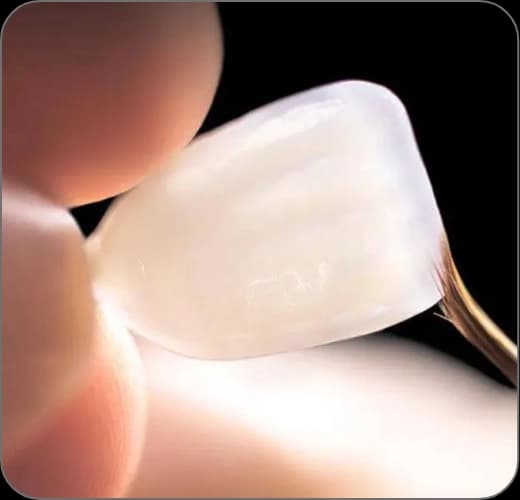
Lithium disilicate glass ceramic, known as E-max, is a restoration material that balances aesthetics with durability and is frequently preferred for front teeth. At our Dental Prime clinic, E-max restorations are planned and placed by our team of dentists according to the tooth's position and your smile design.
What Is a Glass Ceramic (E-max) Restoration?
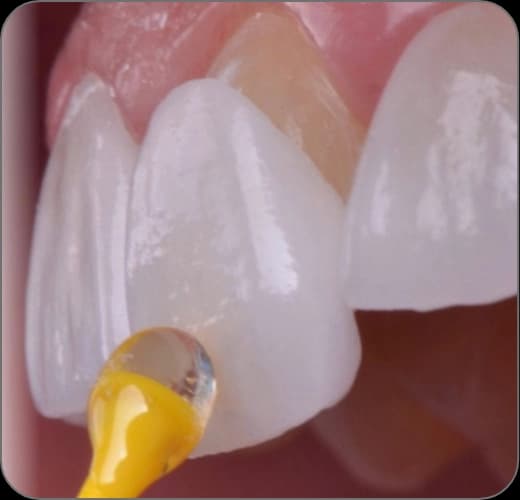
E-max is a type of restoration made from a reinforced glass ceramic called lithium disilicate. It is precisely shaped using pressing or CAD/CAM (computer-aided design and manufacturing) technology and can be used both as a veneer and as a crown.
The material's most distinctive property is that it transmits and reflects light in a way very similar to natural tooth enamel. This produces a lively, deep appearance that blends in with the neighbouring teeth.
The Aesthetic Advantage of E-max
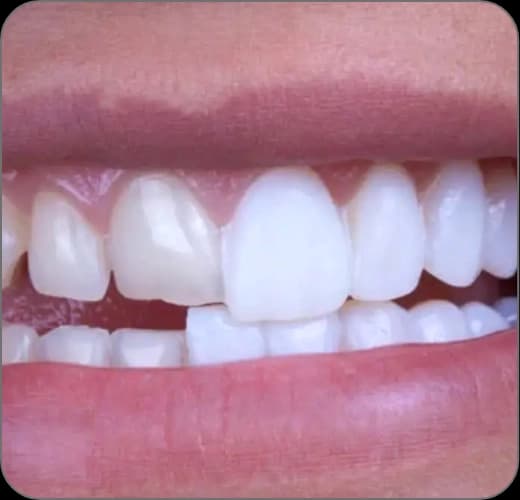
Natural tooth enamel is a semi-translucent tissue; it lets some light through and reflects the rest. Because E-max closely mimics this optical behaviour, it delivers results that do not look artificial, especially on the front teeth within the smile line.
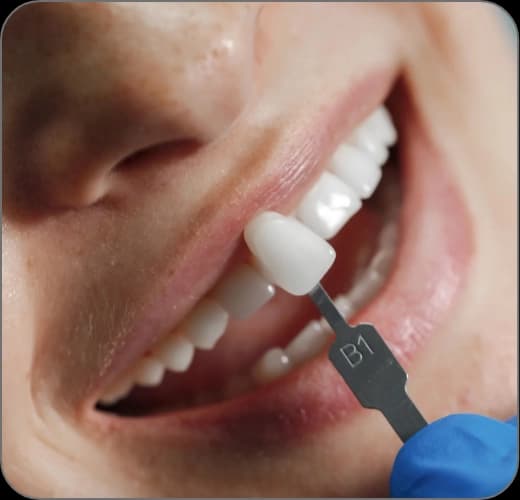
In shade selection, the base colour, saturation and brightness are assessed together; where needed, digital shade measurement and high-resolution photographs are used to convey the tooth's surface texture and colour transitions to the laboratory. This attention to detail is important so the restoration cannot be told apart from the neighbouring teeth.
When Is E-max Preferred?
E-max is considered where aesthetics come first. Its main areas of use are:
- Single crowns on front and premolar teeth
- Laminate veneer applications
- Correcting colour and shape irregularities
- Short-span bridge restorations
- Aesthetically renewing old, discoloured crowns
E-max or Zirconia?
Rather than being alternatives to each other, these two modern materials answer different needs. E-max offers a more translucent, lifelike appearance thanks to its light transmission; zirconia stands out with its fracture resistance in the back of the mouth, where chewing forces are heavy, and in bridges.
Teeth-clenching habits, bite relationships, the tooth's position in the mouth and the colour of the underlying tooth structure are the main factors influencing the choice. Your dentist determines the right material for your tooth with you based on the examination findings; it would not be accurate to say a single material is superior for everyone.
Caring for E-max Restorations
Keeping E-max restorations healthy over the long term depends on daily oral care and regular check-ups. Brushing twice a day with a fluoride toothpaste, using dental floss and carefully cleaning the restoration margins are the basic rules.
Avoiding biting hard objects, not using your teeth as tools for tasks like opening packaging, and wearing a night guard consistently if you clench your teeth all have a positive effect on the lifespan of the restorations; durability varies from patient to patient depending on care and usage habits.
The treatment, step by step
Examination and smile planning
The condition of your teeth and your aesthetic expectations are assessed; the teeth suitable for E-max and the form of restoration (veneer or crown) are determined.
Tooth preparation and impression
Depending on the restoration type, the minimum necessary amount of tooth structure is removed comfortably under local anaesthesia; a precise impression or digital scan is taken.
Temporary restoration
While the permanent restoration is being made in the laboratory, your teeth are protected with aesthetic temporary restorations.
Shade and fit try-in
The colour of the restoration, its translucency transitions, its harmony with the gums and the bite are checked in detail.
Adhesive cementation
The E-max restoration is permanently bonded to the tooth using precise chemical protocols specific to the material; the margins are polished and the bite is checked one final time.