A precision attachment denture (often described as a “snap-on” partial denture) connects a removable denture to crowns placed on the remaining healthy teeth through invisible precision attachments. At our Dental Prime clinic, this treatment is planned by our team of dentists after assessing the condition of the remaining teeth and the jaw structure.
What Is a Precision Attachment Denture?
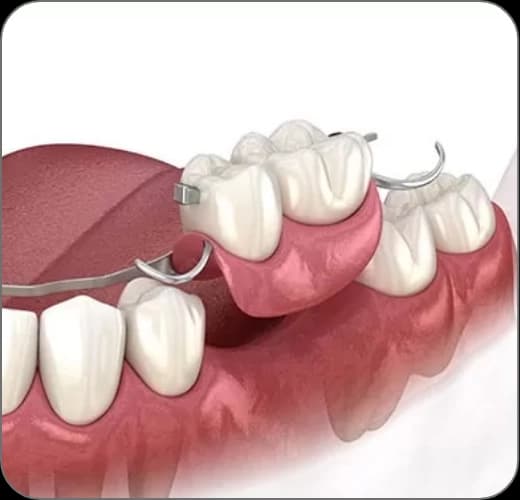
When many teeth are missing and a fixed bridge alone is not sufficient, removable partial dentures come into play. In a precision attachment denture, suitable remaining teeth are covered with crowns, and the removable part clicks into place via male-female attachment components built into those crowns.
The “snap” description comes from the seating sensation the attachments give as the denture is inserted and removed. Because the connecting components are hidden inside the crowns, no metal is visible from the outside.
How It Differs from a Conventional Clasp Denture
In traditional partial dentures, retention is provided by metal clasps (wire hooks) that wrap around the teeth; these clasps can be aesthetically disturbing, especially within the smile line. In a precision attachment system, the retainers are concealed inside the crowns, so the aesthetic appearance is preserved.
Precision attachments also help distribute chewing forces more evenly to the supporting teeth and contribute to the denture sitting more stably in the mouth. Which system is appropriate depends on the number, position and strength of the remaining teeth.
Who Is It Suitable For?
A precision attachment denture is considered for patients with multiple missing teeth who still have natural teeth strong enough and suitably positioned to support the denture. The gums around the supporting teeth must be healthy, and treated beforehand if necessary.
In cases of active gum disease, advanced mobility of the supporting teeth or insufficient tooth structure, these problems are addressed first, or alternatives such as implant-supported dentures are considered together. The decision is made after an examination and X-ray assessment.
Use and Care
The health of the denture and the supporting teeth depends on your daily cleaning routine. The denture should be taken out and cleaned every day with a soft brush and a denture cleanser; the crowned teeth and gums in the mouth should also be brushed carefully.
The replaceable inserts inside the attachments can wear over time, reducing retention; these parts can be renewed under your dentist's supervision. Regular check-ups are important for monitoring both the fit of the denture and the health of the supporting teeth.
- Take the denture out daily and clean it with a brush and denture cleanser
- Brush the crowned supporting teeth and gum margins carefully
- Do not force the denture when inserting or removing it; mind the path of insertion
- See your dentist for insert replacement when retention decreases
- Attend check-ups at the intervals your dentist recommends
The treatment, step by step
Examination and planning
The strength of the remaining teeth, gum health and jaw relationships are assessed; the supporting teeth and the attachment system are determined.
Preparing the supporting teeth
The teeth that will serve as supports are prepared for crowns; any fillings, root canal or gum treatments needed are completed first.
Impressions and try-ins
Precise impressions are taken; the fit of the crowns and the removable part is checked in separate try-ins, and the bite relationships are adjusted.
Fitting the denture
The crowns are cemented and the removable part is seated onto the attachments; insertion, removal and cleaning are demonstrated hands-on.
Adjustment visits
Pressure points and fit are checked in the first weeks; small adjustments during the adaptation period increase the comfort of the denture.