Dental scaling is the professional removal of hardened plaque deposits that brushing and flossing can no longer shift, and it is the cornerstone of protecting the gums from disease. Performed regularly, it helps prevent problems such as bleeding gums, bad breath and gingivitis. At our clinic, scaling is planned together with a full assessment of your gum health.
How does tartar form?
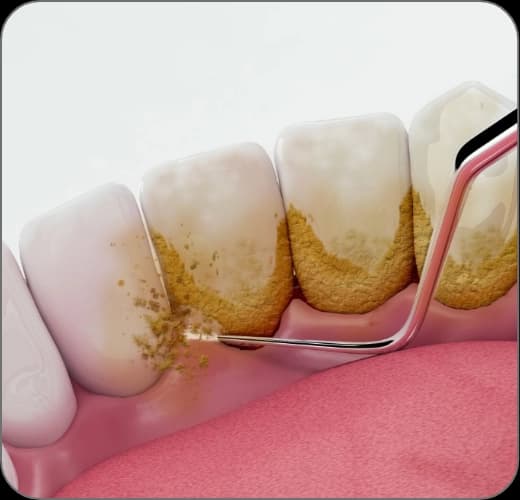
Every day a sticky, colorless film of bacteria, bacterial by-products and saliva — bacterial plaque — forms on our teeth. If this layer is not removed daily by effective brushing and cleaning between the teeth, it combines with the calcium and phosphate minerals in saliva and hardens; this calcified deposit is called tartar (calculus).
Once tartar has formed, it bonds firmly to the tooth surface and can no longer be removed with a toothbrush. The real problem is its rough, porous surface, which offers new plaque an ideal place to attach: until the tartar is removed, the gum around it faces a constant source of inflammation.
Why it matters: the cost of putting it off
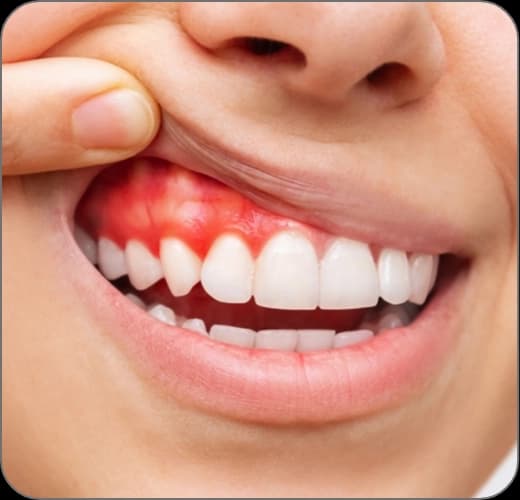
Tartar left in place lays the groundwork for gum inflammation (gingivitis): redness, swelling, bleeding when brushing and bad breath are the first signals of this process. At this stage, gingivitis is fully reversible — with a professional cleaning and good home care, the gums can return to health.
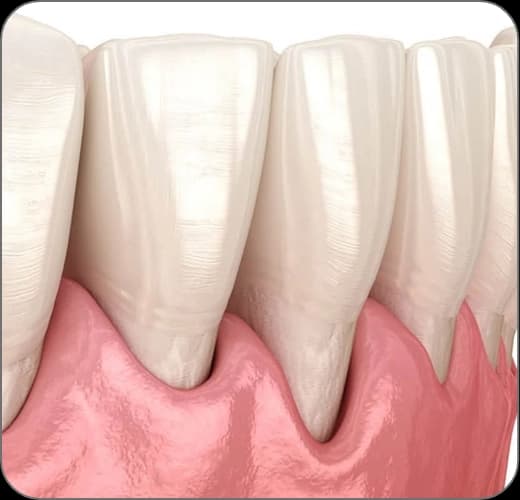
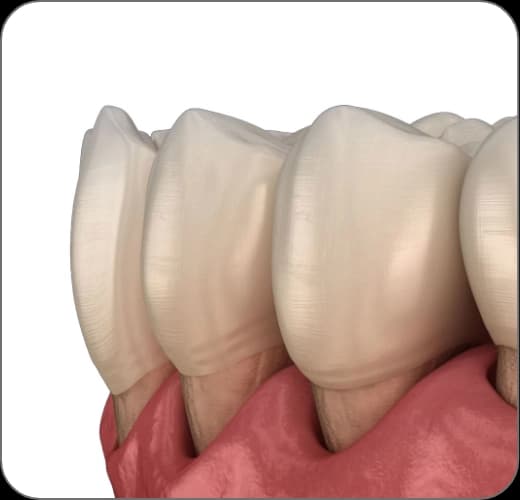
If neglected, however, the inflammation can advance below the gumline and turn into periodontitis, in which the bone supporting the tooth is destroyed. Regular scaling is therefore far more than a simple maintenance procedure: it is the earliest and most easily preventable link in a chain that can end in tooth loss.
How is the cleaning performed?
Before the procedure your gums are examined, and the amount of build-up and the state of your gum health are assessed. The cleaning combines vibration-based ultrasonic devices with fine hand instruments: all tartar deposits on the tooth surfaces and along the gumline are gently removed.
Afterwards the tooth surfaces are smoothed with polishing, which helps remove superficial staining and makes it harder for plaque to reattach. For most patients the procedure is completed in a single visit and usually requires no anesthesia; additional comfort measures can be taken for patients with sensitivity.
How often is it needed? And what about children?
The general recommendation is a dental check-up every six months, with a professional cleaning where needed; the ideal interval, however, varies from person to person. Shorter intervals may be recommended for patients prone to tartar build-up, smokers, those with risk factors such as diabetes, or anyone with a history of gum disease.
Tartar is not only an adult problem; plaque build-up can lead to gum inflammation in children as well. At our pediatric dentistry-focused clinic, children's gum health is monitored as part of their routine check-ups; when needed, a gentle, age-appropriate professional cleaning is carried out, and correct brushing habits are taught through play, without fear.
The treatment, step by step
Examination and assessment
The gums are examined; the amount of tartar build-up and the state of gum health are evaluated.
Ultrasonic cleaning
Plaque and tartar deposits on the tooth surfaces are removed with vibrating tips and hand instruments.
Polishing
The tooth surfaces are polished smooth; superficial staining is removed.
Care advice
Brushing technique and cleaning between the teeth are explained one-to-one; the right check-up interval is set.