Scaling and root planing (SRP) — popularly known as curettage or deep cleaning — is the foundation of periodontitis treatment and goes far beyond a routine dental cleaning. Tartar and bacterial toxins that have built up in the pockets below the gumline are removed, and the root surface is smoothed so that the gum can reattach to it. At our clinic the procedure is performed by our periodontology specialist under local anesthesia, with patient comfort in mind.
What is deep cleaning, and how does it differ from a routine cleaning?
A routine scaling targets the plaque and tartar above the gumline; deep cleaning reaches below it, into the depths of the periodontal pockets. In periodontitis, bacteria colonize the root surfaces beneath the gum — an area that no toothbrush, floss or standard cleaning can reach.
That is why scaling and root planing is considered the core non-surgical treatment for periodontitis: it intervenes directly at the source of the disease — the tartar and bacterial deposits inside the pocket.
How is the procedure performed?
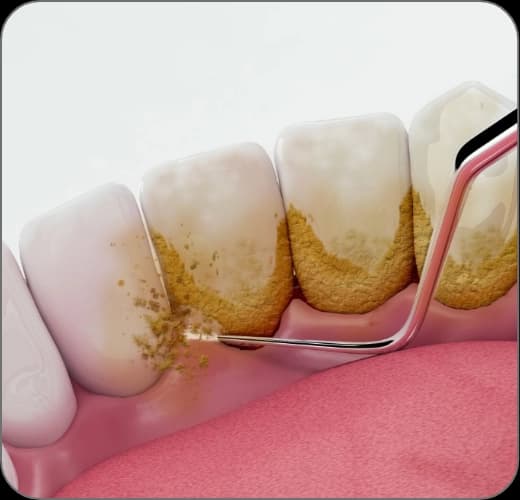
The procedure consists of two complementary steps. The first is scaling: using ultrasonic devices and fine hand instruments (curettes), all plaque and hardened tartar deposits are meticulously removed from both the visible part of the tooth and the root surfaces below the gumline.
The second and more critical step is root planing: bacterial toxins embedded in the root surface and the roughened outer layer are removed, leaving the surface smooth, firm and clean. Because bacteria struggle to attach to smooth surfaces, this step creates a biologically favorable environment for the healing gum to reattach firmly to the tooth. As the work takes place below the gumline, the procedure is done under local anesthesia and is usually completed over several sessions, one section of the mouth at a time.
Are antibiotics needed as well?
In most cases, meticulously performed scaling and root planing is sufficient on its own. In some stubborn or advanced cases, however, adjunctive antimicrobial therapies may be considered to boost the effect of the mechanical cleaning: locally applied agents placed directly into the pocket, or — only in selected situations — systemic antibiotics.
These decisions are made case by case by our periodontology specialist, weighing the extent of the infection, the course of the disease and the patient's general health. Because of the risk of antibiotic resistance, these supportive treatments are reserved for situations in which they are genuinely needed.
Aftercare and re-evaluation
Mild sensitivity can occur in the first days after the procedure; choosing soft foods and following the recommended care routine supports healing. The most important complement to the treatment is the daily care continued at home — correct brushing and cleaning between the teeth.
At a follow-up visit about 4-6 weeks later, pocket depths are measured again and the healing response is assessed. Many patients show reduced pocket depths and less bleeding; where deep pockets persist, surgical options may then be considered for those areas.
The treatment, step by step
Mapping the pockets
Periodontal probing and X-rays identify the areas with deep pockets; the sessions are planned accordingly.
Local anesthesia
The area to be treated is numbed; patient comfort is maintained throughout the procedure.
Scaling
All tartar deposits above and below the gumline are removed with ultrasonic devices and curettes.
Root planing
Toxins and the roughened layer on the root surface are removed; the surface is prepared so the gum can reattach.
Follow-up and assessment
Pocket depths are re-measured after 4-6 weeks; maintenance care or further treatment is planned according to the healing response.