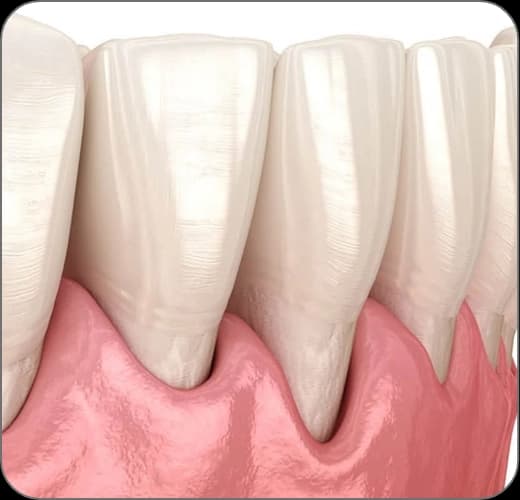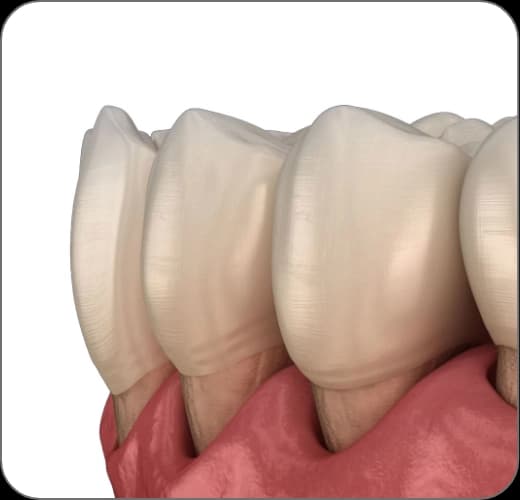
Gum treatment covers the procedures used to bring diseases such as gingivitis and periodontitis under control — conditions that announce themselves with bleeding gums, gum recession, sensitivity and persistent bad breath. At our clinic these treatments are carried out by our specialist in gum diseases and periodontal surgery (periodontology), following an individual plan based on a detailed examination and X-ray evaluation. The aim is to remove the source of the inflammation and restore an oral environment that is healthy in both function and appearance.
What causes gum disease?
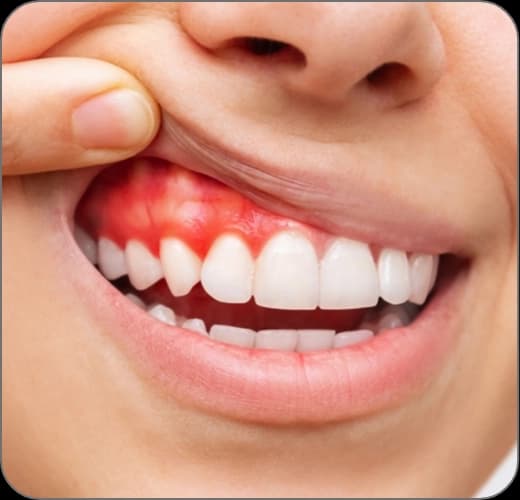
The main culprit behind gum disease is bacterial plaque — a colorless, sticky film that clings to the tooth surfaces and, above all, to the delicate line where tooth and gum meet. As these bacteria metabolize sugary and starchy foods, they release acids and toxins that damage the gums; the body's first response to this attack is inflammation. The gums become red, swollen and tender.
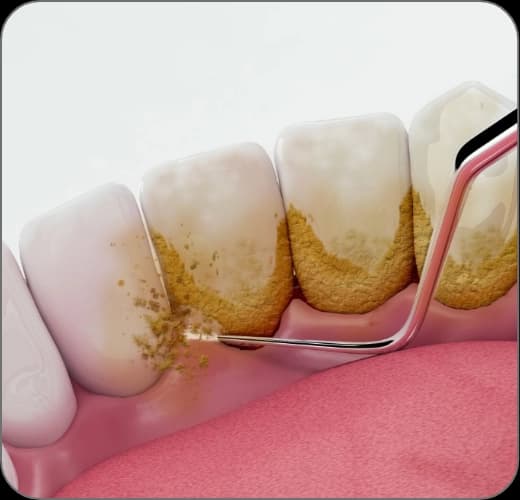
If plaque is not removed by regular brushing and flossing, it hardens with the calcium and phosphate minerals in saliva and turns into tartar (calculus). The rough surface of tartar provides an ideal foothold for new layers of plaque, and at this point it can no longer be removed with a toothbrush. Professional intervention is then needed to eliminate the source of the inflammation.
Gingivitis and periodontitis: two different stages
Gingivitis is the earliest and mildest stage of the disease; the inflammation is confined to the gum itself, and the fibers that anchor the tooth to the bone — along with the surrounding bone — are not yet affected. Its most important feature is that it is reversible: with a professional cleaning and effective daily oral care, the gums can return to health.
Left untreated, gingivitis can progress to periodontitis as the inflammation advances below the gumline. At this stage the fibers and bone tissue supporting the tooth begin to break down, and deepening periodontal pockets form between tooth and gum. The bone loss caused by periodontitis does not grow back on its own, which is why early diagnosis matters so much.
- Gingivitis affects only the gum; periodontitis also affects the bone
- Gingivitis is reversible; the bone loss caused by periodontitis is permanent
- There is no pocket formation in gingivitis; deepening pockets are the hallmark of periodontitis
- In advanced periodontitis, teeth may become loose or shift position
An accurate diagnosis: examination, probing and X-rays
The first step toward successful treatment is a complete diagnosis. The process begins with a detailed conversation covering general health, current medications and risk factors such as smoking, followed by an intraoral examination in which the color and consistency of the gums and the amount of plaque are assessed.
The most important diagnostic tool is periodontal probing: using a fine, millimeter-marked instrument, the depth of the groove between tooth and gum is measured at six points around every tooth. In healthy gums this depth is usually 1-3 mm; readings of 4 mm or more can indicate that the disease is progressing. X-rays are an inseparable part of the diagnosis, revealing what is happening in the bone beneath the gum: they show the amount, pattern and extent of bone loss and guide the treatment plan.
Treatment options: from cleaning to surgery
The first stage of treatment is almost always non-surgical. At the gingivitis stage, a professional dental cleaning and coaching in proper oral care habits are often enough. In periodontitis the core treatment is scaling and root planing (SRP, also known as deep cleaning): the tartar and bacterial toxins that have accumulated in the pockets below the gumline are meticulously removed under local anesthesia. In selected cases this treatment may be supported by locally applied antimicrobial agents.
After this initial phase, the healing response is re-evaluated. Where stubborn deep pockets persist or bone loss is advanced, surgical and regenerative options such as flap surgery, bone grafting, guided tissue regeneration or soft tissue grafts may come into consideration. Which approach is appropriate is decided by weighing the stage of the disease, the pattern of bone loss and the patient's general health together.
Gum health, general health and prevention that starts in childhood
Periodontitis is not a problem confined to the mouth. Scientific studies have shown associations between gum disease and systemic conditions such as cardiovascular disease, diabetes that becomes harder to control, respiratory disease and adverse pregnancy outcomes. Gum treatment should therefore also be seen as part of protecting general health.
Gum health is shaped by foundations laid in childhood. Bleeding gums and gingivitis can occur in children too; at our clinic, which focuses on pediatric dentistry, children learn correct brushing habits from an early age, and both our young and adult patients with gum problems are evaluated together with our periodontology specialist.
The treatment, step by step
Examination and periodontal probing
A general health history is taken; the gums are examined and pocket depths are measured around every tooth.
X-rays and staging
Bone loss is assessed on X-rays; the stage of the disease is determined and an individual treatment plan is drawn up.
Initial treatment
Scaling is performed and, where needed, root planing; correct oral care techniques are taught hands-on.
Re-evaluation
After about 4-6 weeks the healing response is checked; surgical or regenerative options are planned if necessary.
Maintenance and follow-up
Regular supportive periodontal care sessions help keep the disease from becoming active again.