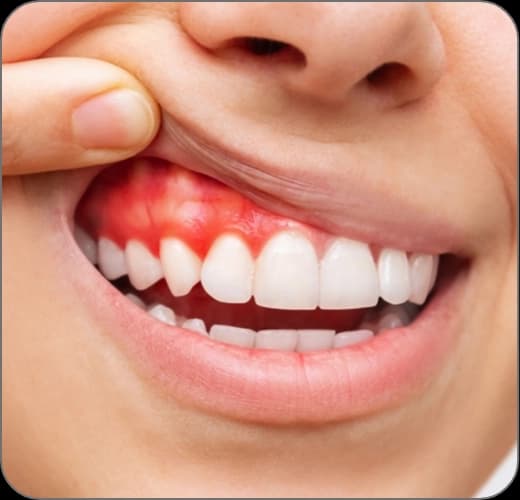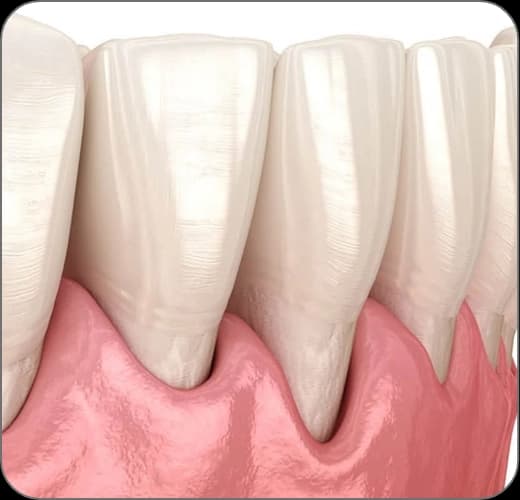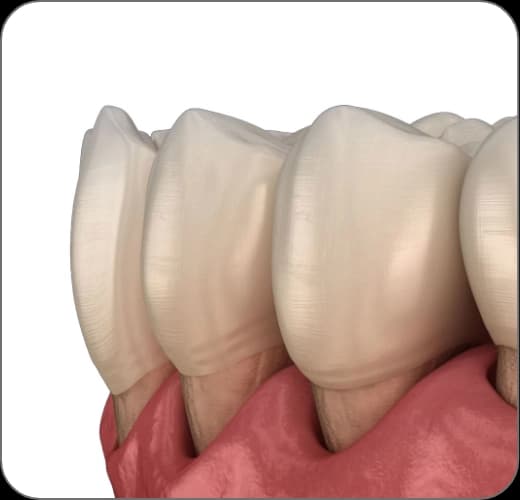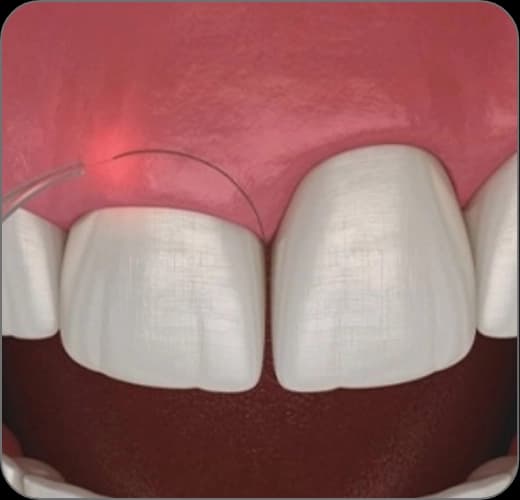
A gingivectomy is a procedure in which excess or overgrown gum tissue is removed and the gumline is recontoured. It can be used for gum overgrowth caused by inflammation or certain medications, to eliminate tissue excess that cannot be kept clean, and for aesthetic requests such as a smile that shows too much gum. At our clinic, a gingivectomy is performed by our periodontology specialist under local anesthesia, after a full evaluation.
What is a gingivectomy?
Gingivectomy literally means the removal of a portion of gum tissue. The aims are to re-establish healthy gum margins, make the full crown of the tooth visible and eliminate tissue excess that is difficult to keep clean.
The procedure is often mentioned alongside gingivoplasty: in a gingivectomy the excess tissue is removed, while in gingivoplasty the remaining gum margin is thinned and sculpted into a natural, harmonious form. The two are frequently performed together in the same session.
When is it used?
The decision for a gingivectomy always rests on a detailed periodontal evaluation; removing tissue without identifying the cause of the overgrowth does not solve the problem. The most common situations are:
- Gum overgrowth due to chronic inflammation and tissue excess that cannot be kept clean
- Gum overgrowth developing as a side effect of certain medications (for example some epilepsy, blood pressure or immunosuppressant drugs)
- A smile that shows too much gum, making the teeth look short (aesthetic recontouring)
- Correcting asymmetries in the gumline before restorative or orthodontic treatment
How is the procedure performed?
Gum health is assessed before the procedure; if active inflammation is present, the ground is first prepared with scaling and, where needed, root planing. A healthy foundation improves both the precision of the procedure and the quality of healing.
The gingivectomy is performed under local anesthesia. After the tissue to be removed is outlined, the excess gum is taken away using conventional surgical instruments, electrosurgery or a laser, and the margins are shaped to follow a natural contour. The procedure is usually completed in a single session; the time needed varies with its extent but is short in most cases.
Healing and how lasting the result is
Mild sensitivity and redness in the first days are normal; choosing soft, lukewarm foods, staying away from smoking and keeping up the recommended oral care all support healing. The gum surface usually settles into its new form within a few weeks.
How lasting the result is depends on controlling the cause of the overgrowth: if oral hygiene lapses, or if medication-related overgrowth is not coordinated with the prescribing physicians, the excess tissue can develop again. Regular check-ups after the procedure are therefore part of the plan.
The treatment, step by step
Evaluation and cause analysis
The cause of the gum overgrowth is identified; pocket measurements are taken and, if needed, the bone level is checked on X-rays.
Preparing the ground
If active inflammation is present, the gums are first calmed with scaling; the procedure is planned on healthy tissue.
Recontouring
Under local anesthesia the excess tissue is removed; the gum margin is shaped to follow its natural contour.
Healing and follow-up
Care instructions are given; healing is monitored at check-ups and a hygiene program is set up to prevent recurrence.